Time to Split: How Split Times Reveal Performance Gaps
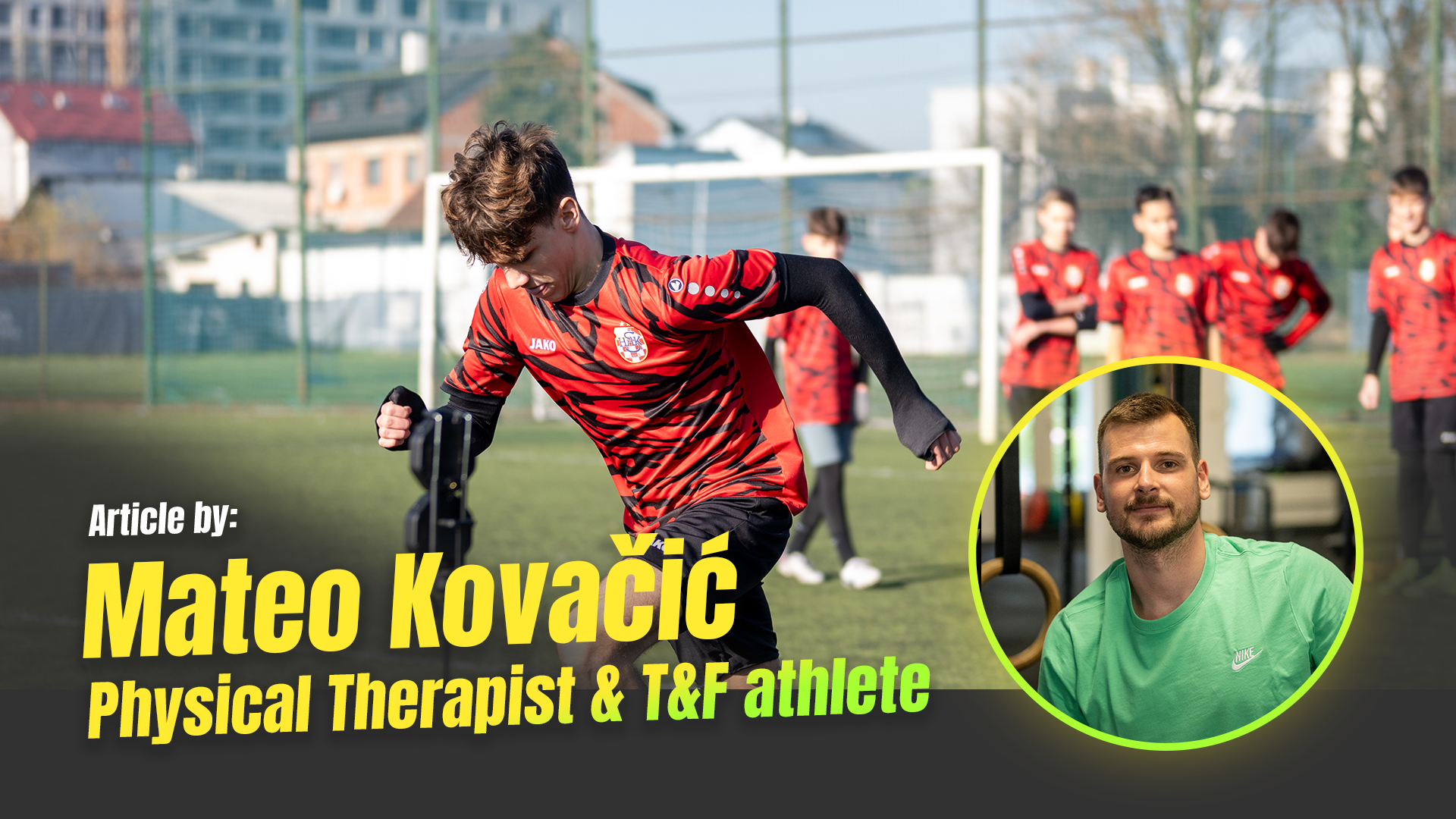
Mateo Kovačić, a kinesiotherapist and former elite sprinter, breaks down how coaches can use split-timing and biomechanical profiling to better understand and improve athlete speed. Drawing from his own experience as a national sprint champion and now working in athlete development, he shows how breaking down sprint phases helps target training and improve performance across sports.
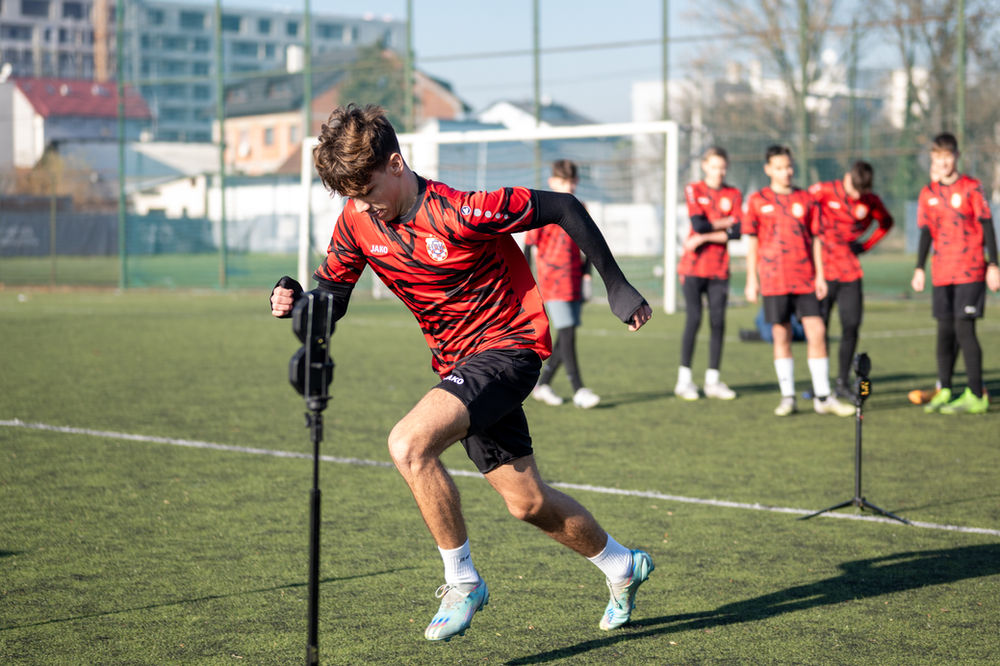
As a coach, I’ve learned that measuring total sprint time alone doesn’t tell the full story. You need to know how fast each segment of the sprint is — from that explosive first 5 meters, through the transition into top speed, and beyond. And when you break down those phases using split timing, you unlock a powerful view into what makes each athlete fast—or what's holding them back.
But timing alone isn't enough. When we combine split times with force, velocity, and power profiles, we can pinpoint exactly where an athlete needs work. Is it early acceleration and first-step quickness? Top-end speed? Or the ability to decelerate and re-accelerate in tight spaces? By understanding an athlete’s mechanical profile—how they produce force and convert it into speed—we can train smarter (Morin & Samozino, 2015).
Whether you're coaching youth players or pros, this approach helps you develop the kind of speed that wins games. Let’s dive in.
1. Unlocking Sprint Performance: One Split at a Time
When we look at sprinting through the lens of split timing, we begin to see sprinting not as one action, but as multiple phases that require different physical qualities. The first step out of the blocks or from a standing position demands explosive horizontal force. As the athlete gains speed, it becomes more about power and efficient movement. Understanding when and where an athlete is fast—or struggling—is the foundation of smart training.
What Split Timing Tells Us
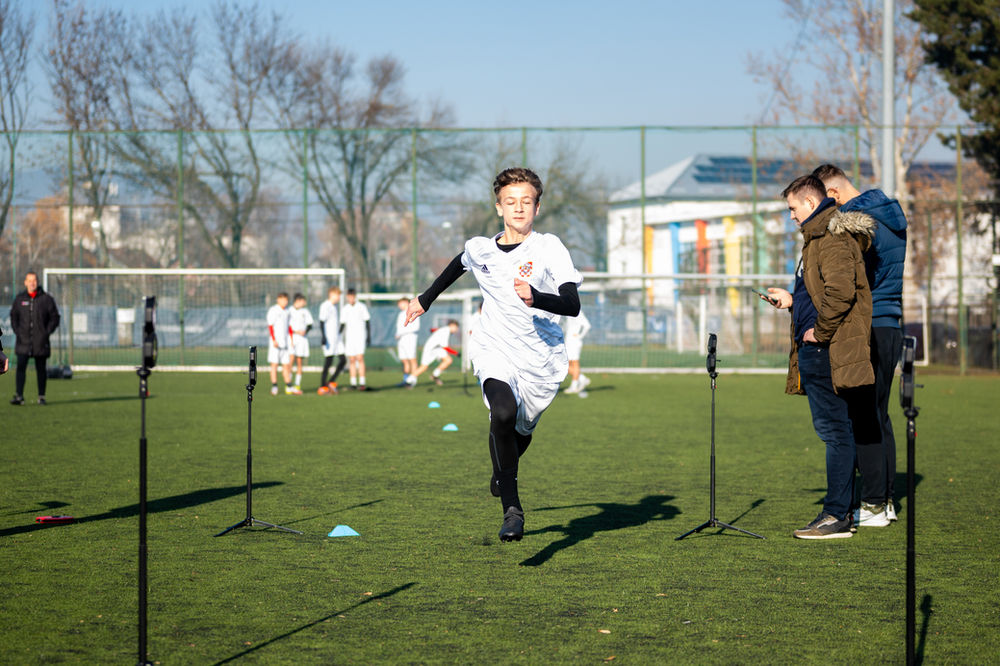
By placing timing gates at key points—5m, 10m, 20m, 30m—we can break down the sprint into:
x Early Acceleration (0–10m): Tells us about an athlete’s ability to produce force quickly (F0) and apply it in the right direction (RFmax) (Morin et al., 2019).
x Mid Acceleration (10–20m): Shows how well an athlete maintains momentum and transitions from power to speed (Flanagan et al., 2025).
x Top-End Speed (20–30m+): Reflects max velocity (V0), efficiency, and technique under fatigue (Bustamante-Garrido et al., 2024).
This breakdown matters because an athlete might have a great 0–10m but fall off quickly. Another might be slow off the line but have excellent top-end speed. Split timing helps us target the right physical quality, whether it’s strength, power, or sprint mechanics (Sarabon et al., 2021).
Biomechanical Metrics from Split‑Timing
Each phase of a sprint corresponds to specific mechanical variables that we can train:
Metric
What It Means
Why It Matters
F0
Maximum horizontal force
Tells us how much raw strength an athlete produces at takeoff
RFmax
Ratio of force in the right direction
Measures how efficiently an athlete applies that strength horizontally
Pmax
Peak power output
The sweet spot between strength and velocity
V0
Theoretical max speed
Top-end sprint potential—key for athletes in open-field sports
DRF
Decline in force with speed
Indicates sprint endurance and ability to sustain acceleration
RSI
Reactive Strength Index
Reflects explosiveness during change-of-direction or repeated sprints
These variables come from modeling simple sprint splits. Tools like the Morin & Samozino field method let coaches estimate them without needing a biomechanics lab.
Early Acceleration (0–5/10 m)
F₀ and RFₘₐₓ mainly determine early splits. Athletes faster in this window demonstrate superior horizontal force generation and application efficiency.
Mid‑Late Acceleration (10–20/30 m)
Pₘₐₓ and V₀ underpin sustained speed and later-phase splits, with DRF capturing force drop-off across high velocities.
Reactive Strength & Agility
Reactive Strength Index (e.g. jump/contact-time derived) correlates strongly with performance through 5–30 m, reflecting ability to decelerate and re‑accelerate during agility or directional tasks.
Longitudinal Tracking
Over training cycles, improvements in F₀, Pₘₐₓ, V₀, and RFₘₐₓ are mirrored by reductions in split times. Seasonal profiling supports targeted phase-specific training.
2. Benchmarks
To assess athletes, we need context. Here are sprint benchmarks for elite male and female athletes:
Male Athletes
Level
0–10m
10–20m
20m Total
Source
U19 Soccer
~1.85s
~1.27s
~3.12s
Szczepanik et al., 2016
Elite Men
–
–
2.7–3.1s
MAT Assessment
Trained Non-Elite
–
–
3.2–3.6s
MAT Assessment
Female Athletes
Level
0–10m
10–20m
20m Total
Source
Elite U17
~1.04s
~1.83s
~3.28s
Salford Uni, 2024
Non-Elite U17
~1.11s
~1.96s
~3.51s
Salford Uni, 2024
International Elite
–
–
~3.18–3.30s
ETSU Repository
3. Actionable data: Applications Across Sports
Let’s say your athlete is explosive over 0–10m but gets caught from behind after 20m. The data might show a strong F0 but weak V0 or poor DRF. That tells you to add velocity-focused drills, flying sprints, or technical work at max speed (Bustamante-Garrido et al., 2024).
Or maybe your athlete is fast in testing but struggles to decelerate or re-accelerate in games. A low RSI score might show poor reactive strength, so we target plyometrics, depth jumps, or COD drills under fatigue (Flanagan et al., 2025).
The key is matching the training to the metric—using the data to guide what the athlete actually needs.
Soccer, Rugby, Hockey
Athletes need bursts (0–10m), sustained runs (20–30m), and repeatability. Split timing + RSI profiling = gold standard for tailoring drills (Mitrečić et al., 2025).
Split-Timing helps isolate whether strength/power or speed-endurance is limiting performance. Comparing individual splits to normative female values (e.g. ~1.83 s in top 10 m) can guide training priorities, such as horizontal force work or velocity drills.
Identifying an athlete’s force–velocity slope supports customized programming: steep slope suggests velocity exposure; shallow slope calls for strength/power emphasis. Split timing unpacks where in the sprint curve performance falters.
Basketball, Volleyball
Acceleration and re-acceleration dominate. Focus on 5–10m splits, contact times, and RSI (Flanagan et al., 2025).
Track & Field Sprinters
Use split timing to tune technical execution and tailor block starts, flying sprints, and overspeed work (Hicks et al., 2022).
Acceleration, Deceleration & Change‑of‑Direction
High reactive strength paired with excellent mid-phase speed indicates readiness for sports involving frequent accelerations/decelerations. Training should integrate plyometric, change‑of‑direction drills and force application cues.
Long-Term Monitoring: Tracking Real Progress
You can use split timing across a season to measure:
Strength-focused training = improvements in F0, 0–5m times (Morin et al., 2019)
Power and plyometric work = gains in Pmax, 10–20m times, RSI (Flanagan et al., 2025)
Sprint mechanics & overspeed = improvements in V0, DRF, 20–30m times (Bustamante-Garrido et al., 2024)
This kind of individualized programming beats generic speed training every time.
Long-Term Monitoring: Tracking Real Progress
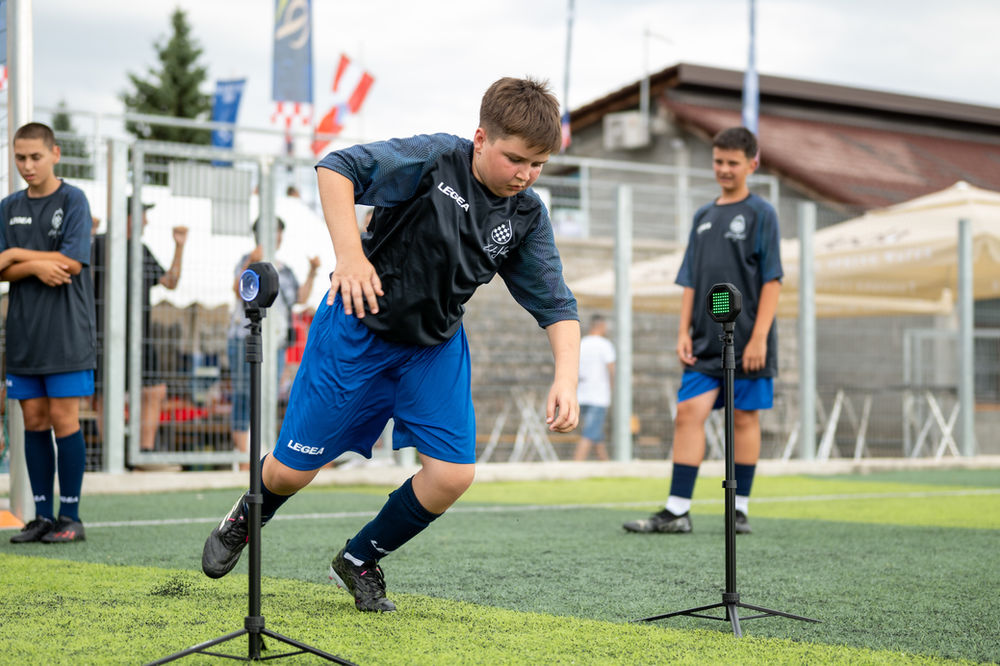
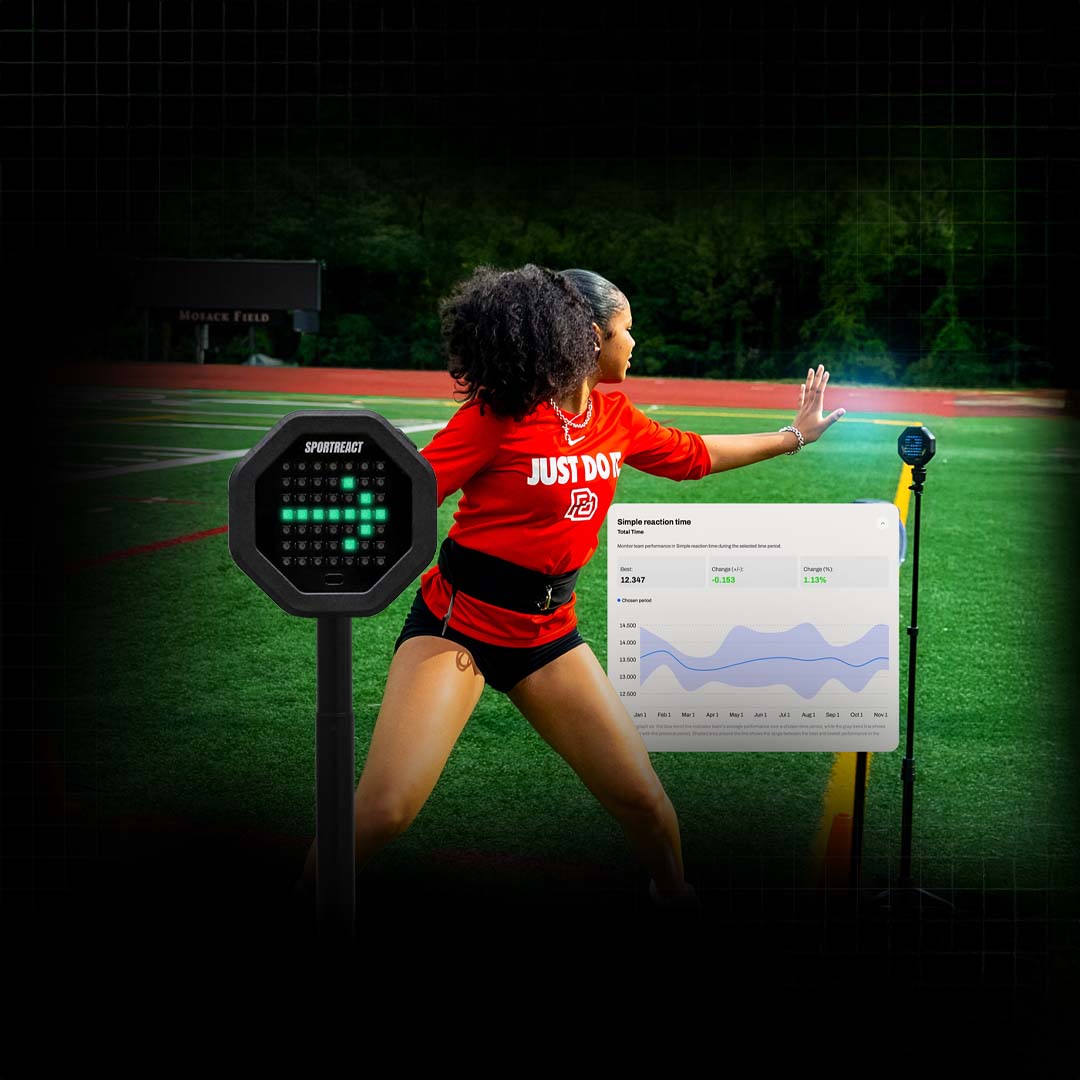
As a coach, I’m always looking for that one tool that gives me better insight, clearer data, and faster decisions. That’s why we rely on the Sportreact System. The timing gates give us laser-accurate split times across 5, 10, 20, and 30 meters. But the real game-changer? Sportreact PLUS.
This app gives me instant access to detailed sprint analytics - acceleration, power, force - you name it. After each test, I can break down exactly where an athlete excels or needs development. I can compare athletes against normative standards, track individual growth week by week, and even sort my whole team by force output or acceleration capacity. It’s all automatic, and it’s all in the app.
With Sportreact PLUS, we don’t just guess who’s improving—we see it. We don’t assume where an athlete is weak—we know. And we’re not just building faster athletes—we’re developing complete performance profiles based on real data, personalized training, and next-level accountability.
This isn’t just timing anymore. It’s performance intelligence. And it’s changing the way we coach.
MATEO KOVACIC
Meet Mateo: a kinesiotherapist and former elite track and field athlete, brings a wealth of experience to his writing. A multiple-time national champion in the 400 meters and a European 4x400 relay competitor, he now channels his expertise into coaching youth athletes in speed development.
Mateo shares insights on training techniques, athlete development, and his journey from the track to coaching.
Bustamante-Garrido, A., Carbo-Carreté, M., Romero-Franco, N., & Padullés-Riu, J. M. (2024). Reliability of mechanical sprint variables obtained with a field method: Radar vs. timing gates. Frontiers in Sports and Active Living, 6, 1480973. https://www.frontiersin.org/articles/10.3389/fspor.2024.1480973/full
Flanagan, E. P., McCann, A., & Moran, K. A. (2025). Relationship between reactive strength index and sprint performance in youth and elite athletes. Applied Sciences, 15(12), 6910. https://www.mdpi.com/2076-3417/15/12/6910
McMahon, J. J., Jones, P. A., Suchomel, T. J., Lake, J. P., & Comfort, P. (2017). Reliability of 5-, 10-, and 20-m sprint times in male and female athletes. Measurement in Physical Education and Exercise Science, 21(4), 258–263. https://www.researchgate.net/publication/318116429
Mitrečić, L., Janković, N., Šarabon, N., & Ivković, A. (2025). Sprint force-velocity profiling and split performance in elite amateur soccer players. Montenegrin Journal of Sports Science and Medicine, 14(1), 15–21. https://mjssm.me/clanci/MJSSM_March_2025_Mitrecic.pdf
Morin, J. B., & Samozino, P. (2015). A simple method for measuring power, force, and velocity properties of sprinting. Journal of Biomechanics, 48(12), 2845–2852. https://www.researchgate.net/publication/271907679
Sarabon, N., Smajla, D., Kozinc, Ž., & Markovic, G. (2021). Sprint performance and mechanical characteristics across different training levels in football players. International Journal of Environmental Research and Public Health, 18(14), 7690. https://www.ncbi.nlm.nih.gov/pmc/articles/PMC8219273/
Sign up to get your exclusive offer and start training better today.
Thanks for submiting! Check out your inbox and spam fodler for extra offer.
Oops! Something went wrong while submitting the form.
Thanks for submiting! Check out your inbox and spam fodler for extra offer.
Oops! Something went wrong while submitting the form.
By signing up, you accept our privacy policy. Your personal data will be processed so that we can contact you about our products via email or WhatsApp. Read our Privacy Policy for more information.