Is The Golden Age for Developing Motor Skills a Myth?
The concept of a "golden age" for motor skill development is prevalent in many Long-Term Athlete Development (LTAD) models. These models propose that there are optimal periods during childhood and adolescence for training specific motor abilities. But does modern research support this theory?
LTAD Models and Sensitive Periods
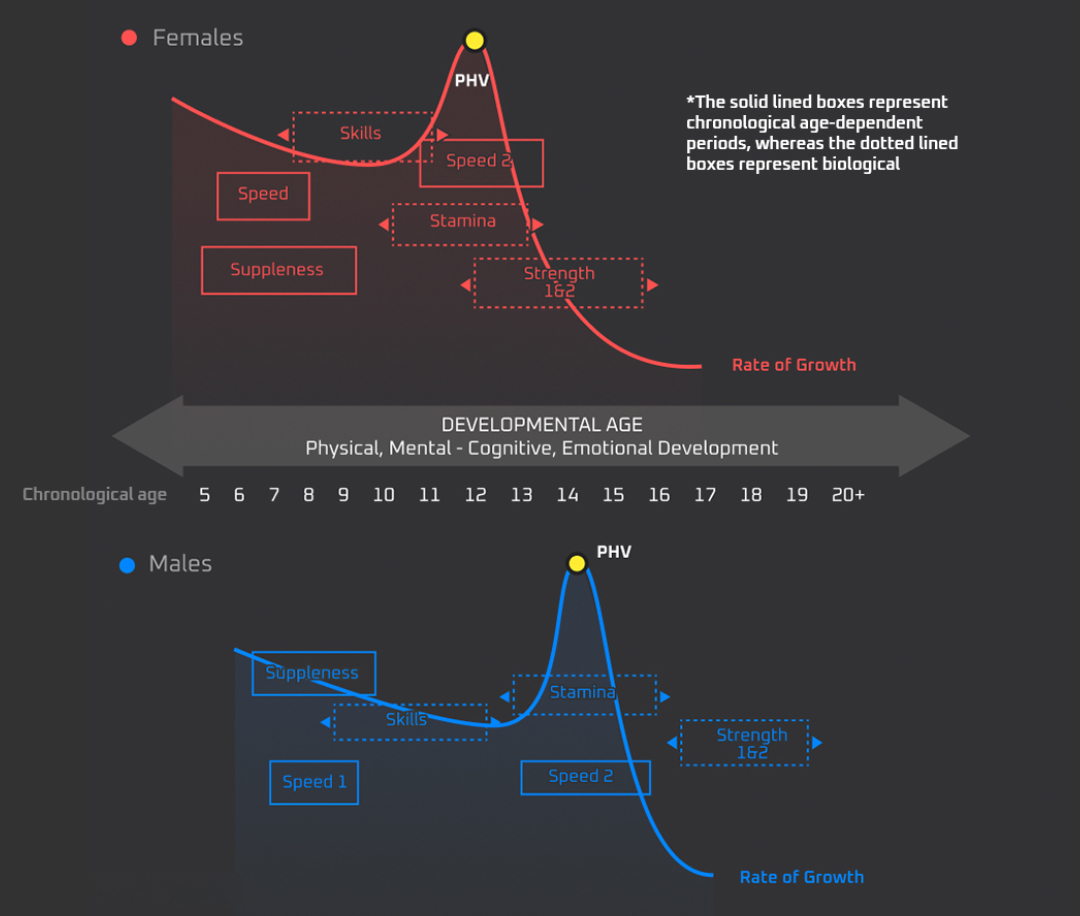
Long-term athlete development (LTAD) models often categorize (simplify) physical attributes into five general motor abilities:
xflexibility,
xspeed,
xcoordination,
xendurance,
xstrength.
They suggest that certain ages, known as sensitive periods, are particularly effective for improving these skills. For example, the ages 7-12 are often cited as prime times for developing motor skills in both male and female athletes (See more in the figure 1).
Understanding the difference between Biological vs. Chronological Age
When discussing LTAD models it's crucial to differentiate between biological age (developmental stage) and chronological age (actual age). LTAD models typically propose sensitive periods based on chronological age, but recent studies suggest that biological age might be a more accurate measure.
What is the difference between Sensitive vs. Critial Period?
In sports, a critical period is a narrow timeframe when specific experiences or stimuli are essential for the normal development of crucial abilities. Missing this window can affect an athlete's potential to fully acquire these skills later on. On the other hand, a sensitive period represents a broader - optimal time when athletes are particularly responsive to learning and skill acquisition.
The Debate: Reductionist vs. Holistic Approaches
Recent research by Van Hooren et al. (2020) criticizes the reductionist approach of LTAD models for oversimplifying the complex nature of motor abilities. They argue that these models fail to account for the interconnectedness of skills, task-specificity, and individual factors like genetics and prior experience.
Task-Specific Sensitive Periods
Van Hooren et al. (2020) propose a more holistic approach, suggesting that if sensitive periods exist, they are largely task-specific. For example, a study by Solum et al. (2020) on dart throwing with non-dominant hands found no significant difference in learning curves between 10-year-olds, 18-year-olds, and 40-year-olds, challenging the notion of age-specific advantages in motor learning.
Conclusion: Are sensitive periods crucial for motor skill development?
While LTAD models provide a useful framework, holistic approach teaches us that it's essential to consider individual differences and task-specific requirements. Effective training should be tailored to the athlete's developmental stage, previous experience, and specific sport demands.
Key Factors Influencing Motor Skills Development:
xGenetics: Innate abilities play a significant role in how quickly and effectively motor skills develop.
xEnvironment: Exposure to different physical activities and sports can enhance motor skills development.
x Practice Opportunities: Regular and diverse practice is crucial for obtaining progress.
How To Enhance Motor Skills Training?
Enhancing motor skills training involves incorporating diverse and engaging activities that challenge both fine and gross motor skills. Utilizing tools like balance boards, obstacle courses, and interactive games can help improve coordination and muscle control. Regular practice, combined with positive reinforcement, keeps young athletes motivated and focused. Tailoring exercises to individual needs and gradually increasing difficulty ensures continuous progress and skill development.
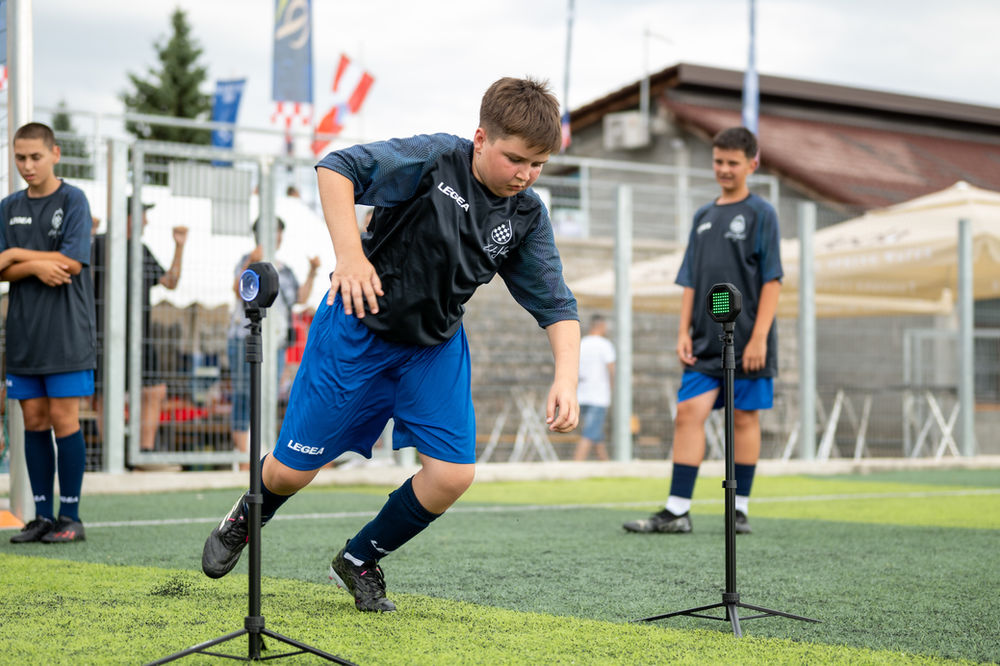
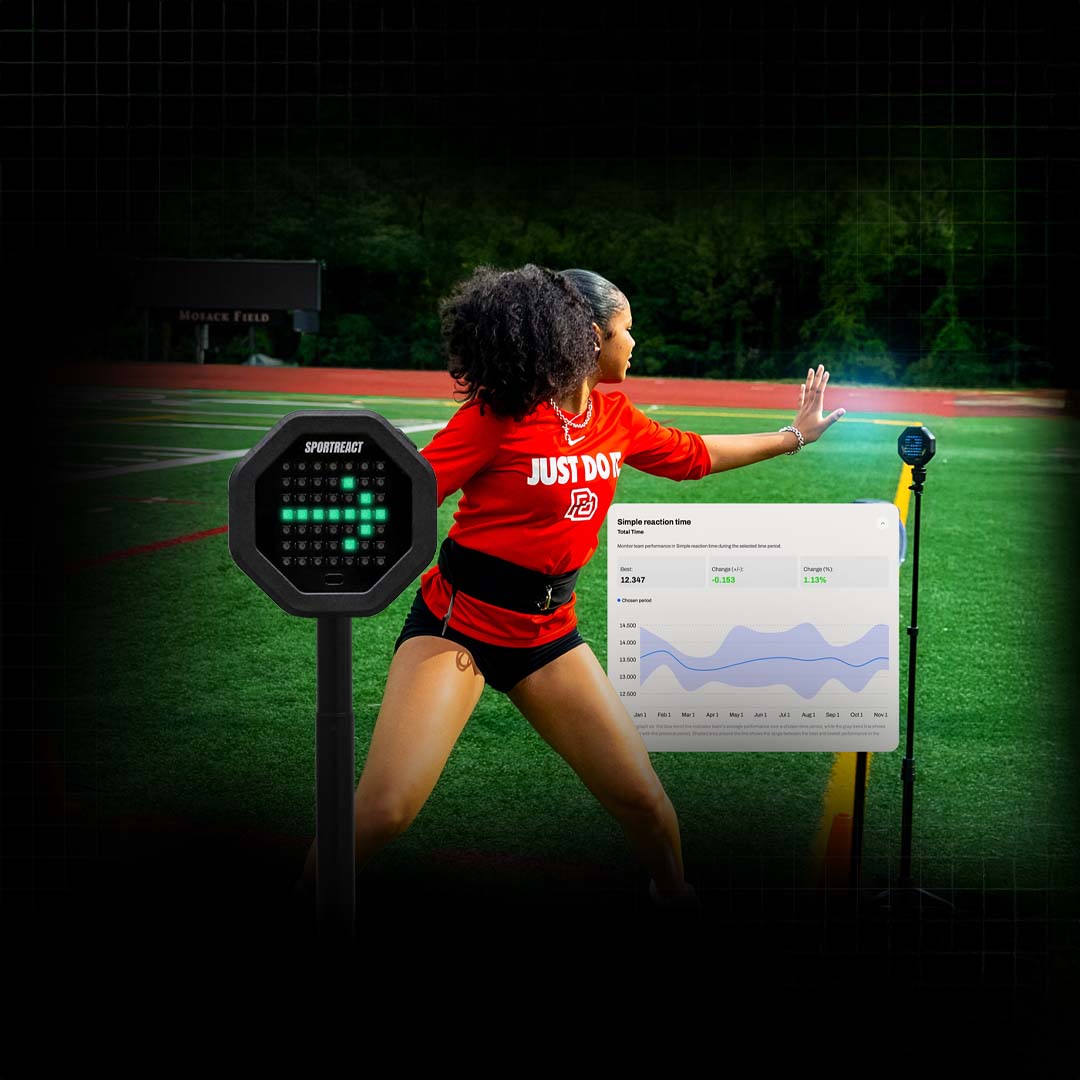
Tools like Sportreact can help optimize this process, ensuring that athletes receive the most effective training at any stage of their development. With the Sportreact device, coach can easily conduct spatial awareness and agility training, as well as precisely measure progress in abilities such as speed, reaction time, and agility. The app’s analytics features allow for individualized, sport-specific drills and provide the opportunity to continuously track athletes’ progress and adjust training accordingly.
By using Sportreact, coach can:
xPrecisely assess speed, reaction time and agility during pretests or training sessions.
xTrack progress with detailed analytics.
x Craft individualized, sport-specific drills to enhance coordination, agility, and other motor skills.
x Provide valuable feedback to motivate athletes and refine their training.
Video 2: How to enhance motor skills with Sportreact device?
References
Balyi, I., & Way, R. (2005). The role of monitoring growth in long-term athlete development. Canadian sport for life, 2(1), 47-64.
Solum, M., Lorås, H., & Pedersen, A. V. (2020). A golden age for motor skill learning? Learning of an unfamiliar motor task in 10-year-olds, young adults, and adults, when starting from similar baselines. Frontiers in psychology, 11
Van Hooren, B., & De Ste Croix, M. (2020). Sensitive periods to train general motor abilities in children and adolescents: do they exist? A critical appraisal. Strength & Conditioning Journal, 42(6), 7-14.
MATEO KOVACIC
Meet Mateo: a kinesiotherapist and former elite track and field athlete, brings a wealth of experience to his writing. A multiple-time national champion in the 400 meters and a European 4x400 relay competitor, he now channels his expertise into coaching youth athletes in speed development.
Mateo shares insights on training techniques, athlete development, and his journey from the track to coaching.
Sign up to get your exclusive offer and start training better today.
Thanks for submiting! Check out your inbox and spam fodler for extra offer.
Oops! Something went wrong while submitting the form.
Thanks for submiting! Check out your inbox and spam fodler for extra offer.
Oops! Something went wrong while submitting the form.
By signing up, you accept our privacy policy. Your personal data will be processed so that we can contact you about our products via email or WhatsApp. Read our Privacy Policy for more information.